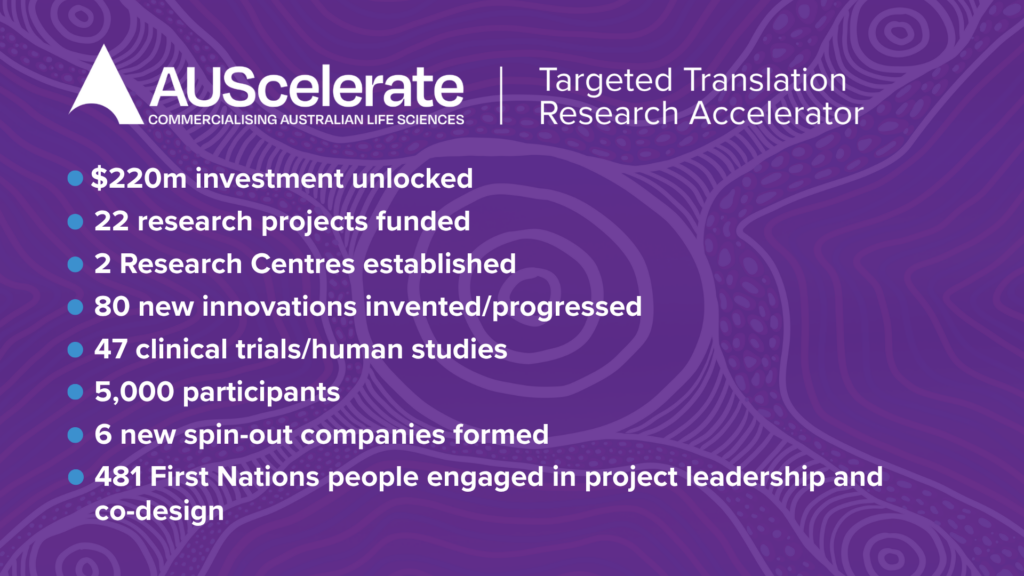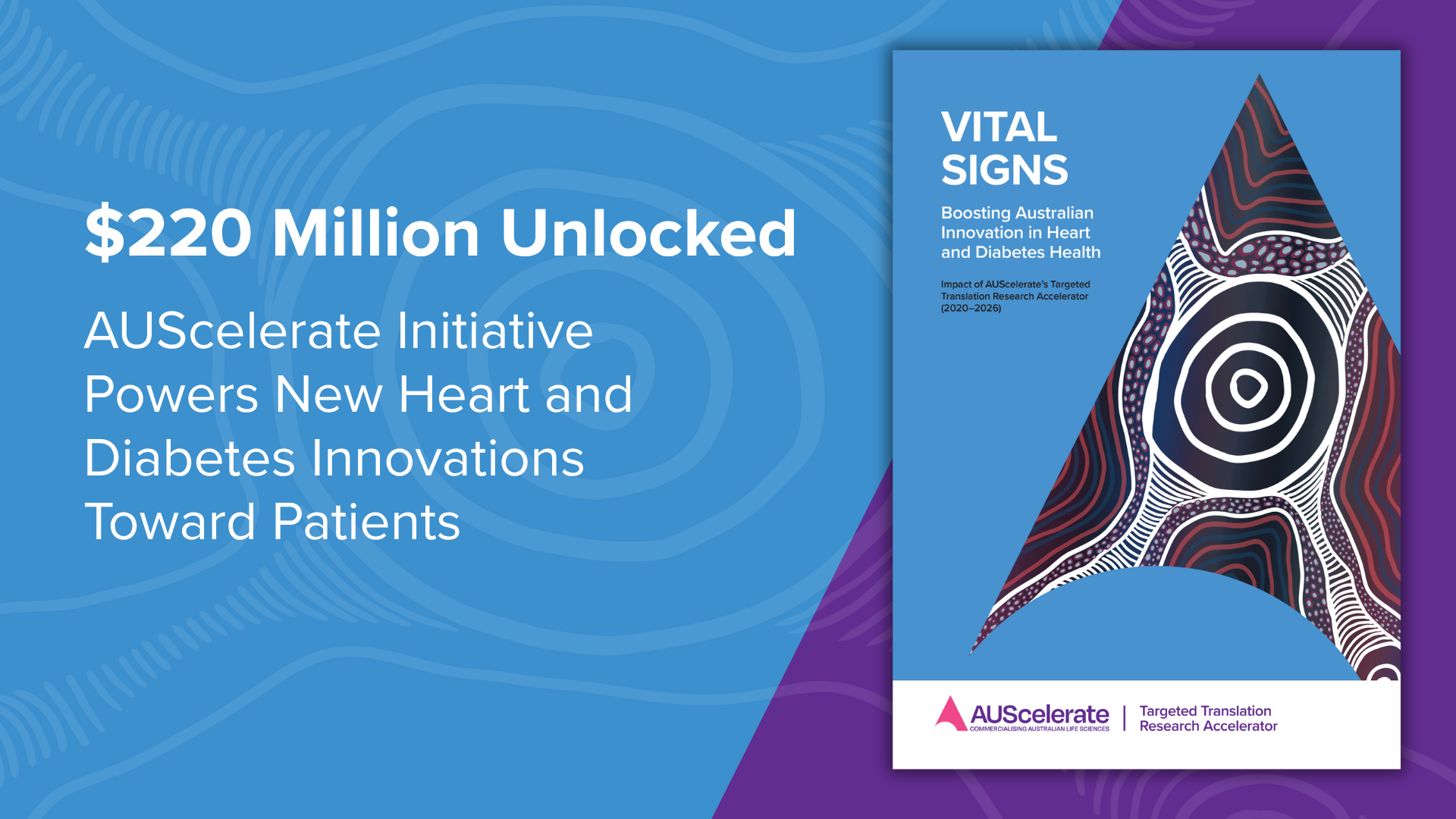
Released today, the report – Vital Signs: Boosting Australian Innovation in Heart and Diabetes Health – details the results of the six-year program which also featured a dedicated round for First Nations health initiatives and saw 47 new clinical trials commenced reaching over 5,000 people.
AUScelerate CEO and MD Stuart Dignam said the program, supported by the Medical Research Future Fund, has de-risked innovations for private investment, increased funding into Australia’s life sciences sector and made a real-world impact.
“Much has been said lately about how to overcome the challenges of life science translation and commercialisation. The impressive results of AUScelerate’s TTRA are a tangible example of how it can be done,” Mr Dignam said.
“Innovations supported include new therapies, treatment strategies and strengths-based models of care for kidney disease, peripheral artery disease, atherosclerosis and stroke, improved glucose control, coronary artery disease, heart failure, mental health and First Nations health and wellbeing.
“Achievements include development of an oral insulin drug delivery platform, a controller for the BiVACOR total artificial heart, antithrombotic therapies for better stroke treatment, technology to detect unstable coronary plaques, as well as the world’s first national helpline providing mental health support via telehealth directly to adults with diabetes and cardiovascular disease, and a strengths-based model of peer-led diabetes support and education for First Nations youth in the Northern Territory.
“New products and solutions have been accelerated toward clinical impact, with clinical trials and human participant studies reaching over 5,000 participants. And two new groundbreaking Research Centres were established – ACADI and ASHRA – focusing on unmet needs of diabetes and cardiovascular disease complications.
“Diabetes and cardiovascular disease are among the most widespread health conditions facing communities across Australia and AUScelerate’s TTRA program demonstrates how targeted intervention can maximise the return on research investment and accelerate the delivery of meaningful health outcomes to make a difference to people’s lives,” Mr Dignam said.
AUScelerate thanks the TTRA Expert Advisory Board (chaired by Hon. Judi Moylan AO) for its guidance and expertise and program partners – ANDHealth, the Australian Centre for Health Services Innovation (AusHSI), the Lowitja Institute, Medical Device Partnering Program (MDPP) and UniQuest – who have strengthened the program and the projects. We also acknowledge the contribution of the members of the TTRA Indigenous Advisory Group.