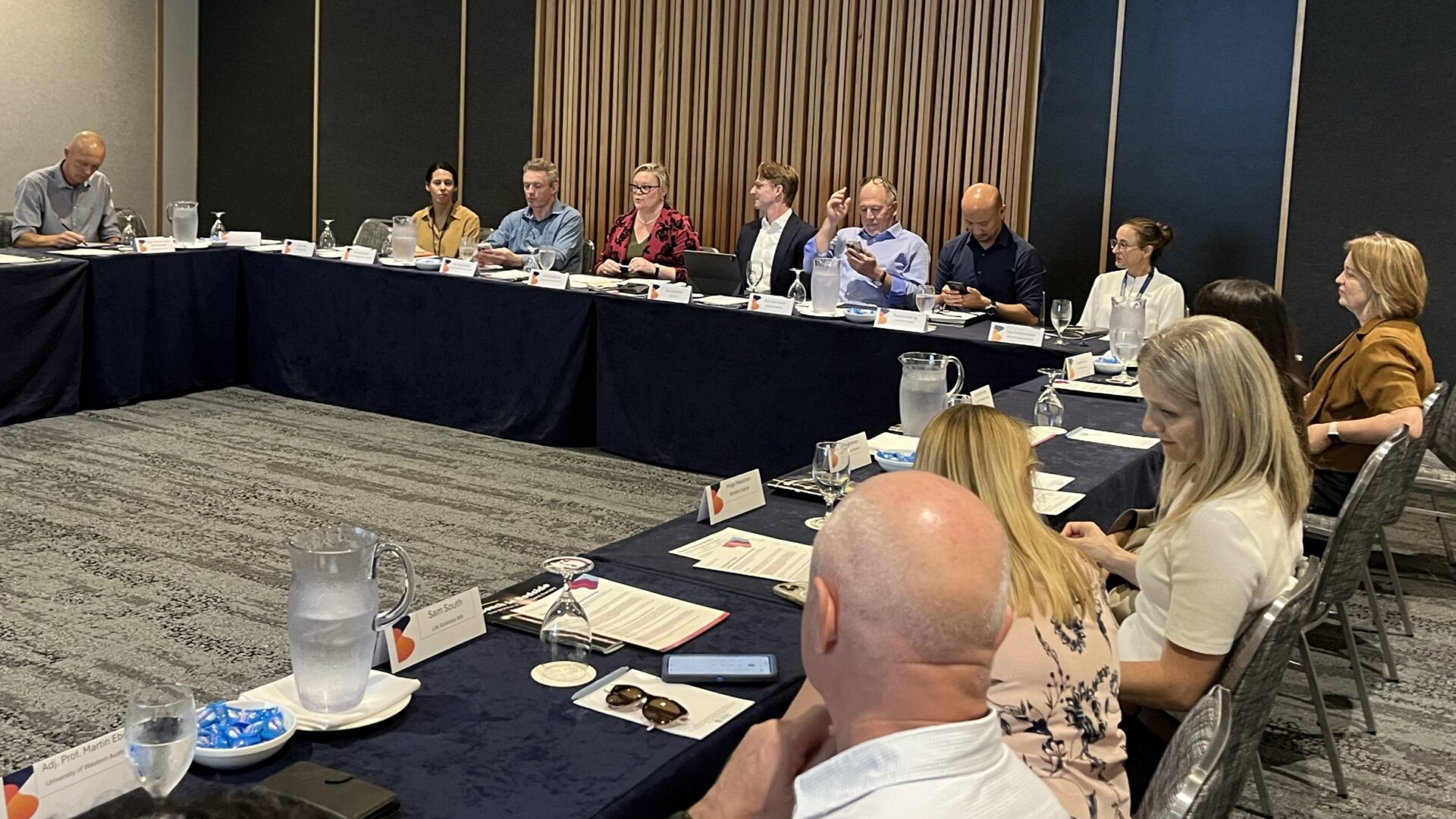
Novartis Australia and the WA Life Sciences Innovation Hub recently brought together key organisations from WA’s biomedical ecosystem for a roundtable discussion on radioligand therapy (RLT), an emerging advanced cancer treatment, and the potential for WA to become a leading centre of excellence for nuclear medicine.
It was a valuable opportunity to gather the sector and take a collaborative approach to ecosystem development, informed by insights about opportunities and barriers from a diverse collection of perspectives. Facilitating these important conversations and connections is a core part of WALSIH’s mission and leverages the Hub’s position at the interface of government, academia, and industry to enhance the growth and potential of WA’s biomedical sector.
Key organisations from WA’s biomedical ecosystem joined the discussion, which featured presentations from Kee-Ming Chia (Novartis), Thomas Tuchyna (Cyclowest) and Martin Ebert (UWA). It was very encouraging to hear about the capability already in place to prepare the key elements of radiopharmaceutical diagnostic and therapeutic materials, and about programs that are already in place to generate this highly specialised workforce.
RLT is an emerging cancer treatment option with great potential and growing interest – the global market size is expected to reach $21 billion by 2032. Globally, there are 30 companies actively involved in 300 RLT clinical trials. Novartis has a promising pipeline in RLT, with 17 assets across 19 indications looking at RLTs in different tumours. Ten of Novartis’ 29 active RLT trials are being conducted in Australia.
A key takeaway was that WA’s existing infrastructure, expertise, resources and investment means the building blocks are already in place to become a global hub for RLT research, development, and clinical application in this area of precision oncology medicine.
This includes:
While there are challenges in realising the full potential in RLT in WA, the economic opportunities and benefits of investing in RLT are substantial and the impacts on cancer patients are potentially life changing.


