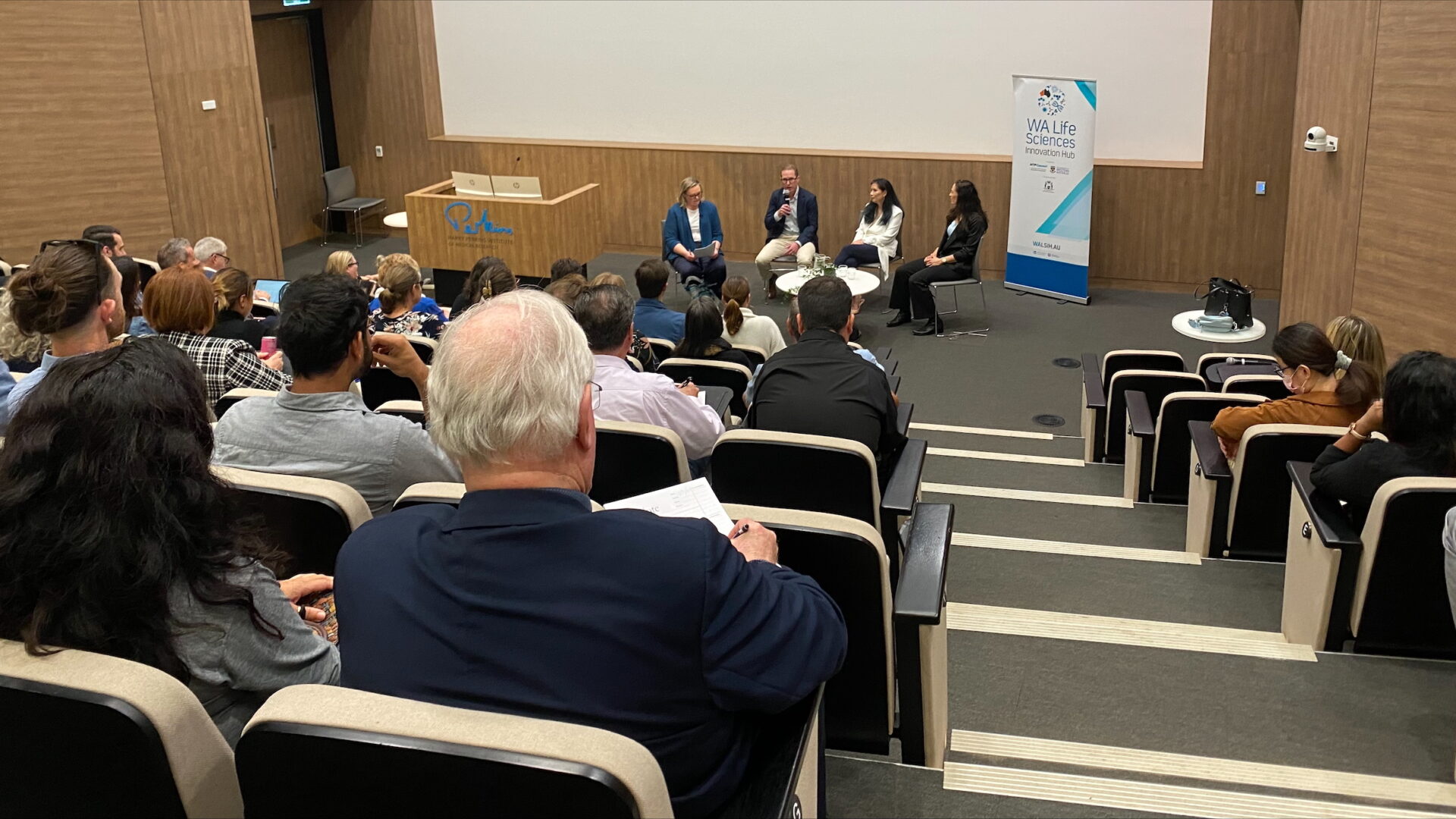
The sector gathered for our latest Spotlight event last Tuesday to discuss clinical trials in WA, its evolution into a globally competitive ecosystem, the value of its contribution to the growth of our biomedical sector, and the work underway to bring trials to Western Australians wherever they live.
The conversation brought together three experts from different parts of the state’s clinical trials landscape: Jayden Rogers, CEO of Linear Clinical Research; Dr Clair Lee, Director, Research & Development at Orthocell Ltd; and Nadine Herren, Acting Project Lead at the WA Country Health Service (WACHS) Trial Centre, in conversation with our Director of Stakeholder Engagement Dr Tracey Wilkinson.
Together, they reflected on the challenges, opportunities, and collaborative models shaping WA’s growing reputation as a trials-ready destination. More insights can be found in MTPConnect’s Clinical Trials Reports, which provide a snapshot of the size and scope of Australia’s clinical trials sector, highlighting areas of success and imperatives of improvement.
According to the latest report released in 2024, Australia’s clinical trials sector recorded $1.6 billion in expenditure in 2022, employed 7,700 Australians, launched 1,850 new trials, and saw participation from 90,000 Australians[1]. As the nation’s life sciences innovation accelerator, MTPConnect has played a key role in supporting and strengthening this vital sector.
Tuesday’s conversation acknowledged an exciting milestone: Linear Clinical Research is celebrating its 15th anniversary this month. Established by the Harry Perkins Institute (the brainchild of Professors Peter Klinken and Peter Leedman), the organisation has grown to over 200 staff, has tripled in size in just four years, and has international recognition for its world-class high-performance clinical trial delivery – particularly in early-phase oncology.
Orthocell’s journey has taken it through complex regulatory transitions as it brings its regenerative medicine products to global markets. Clair outlined the differences between medical device clinical trials compared with therapeutic trials, overlayed with the challenges of operating in a small company compared with a large pharma or CRO. She noted the change in device trials in the last decade and the increasing requirements of regulators to see evidence of performance of medical devices.
Representing the largest geographical health service in the world, WACHS, Nadine spoke about providing access to clinical trials outside metropolitan Perth through the WACHS Trials Centre. The importance of partnerships to improve coordination between metro hospitals/institutes, regional sites and sponsors, all connected through the Centre, is key to success. Nadine also highlighted WACHS’ flexible trial teams, which are deployed to work alongside local clinicians in regional communities. This ensures high-quality data, participant safety, and care delivered close to home. Read more about the WACHS Trials Centre here.
Key Takeaways from the Discussion
The vision for the future of the sector was clear: a more inclusive, better connected, and globally recognised WA clinical trials sector that delivers economic value, jobs, and better health outcomes for our community.
This event is part of the WA Life Sciences Innovation Hub’s monthly Spotlight series, showcasing local innovators and exploring emerging trends shaping the future of health and medical research in WA.
To stay up to date on future events and ecosystem opportunities, follow us on LinkedIn or join our mailing list.
[1] https://www.mtpconnect.org.au/images/MTPConnect_2024_AustraliasClinicalTrialsSectorReport.pdf


